
Chisapani Hike from Kathmandu: Route, Timing & Where to Stay (2026)
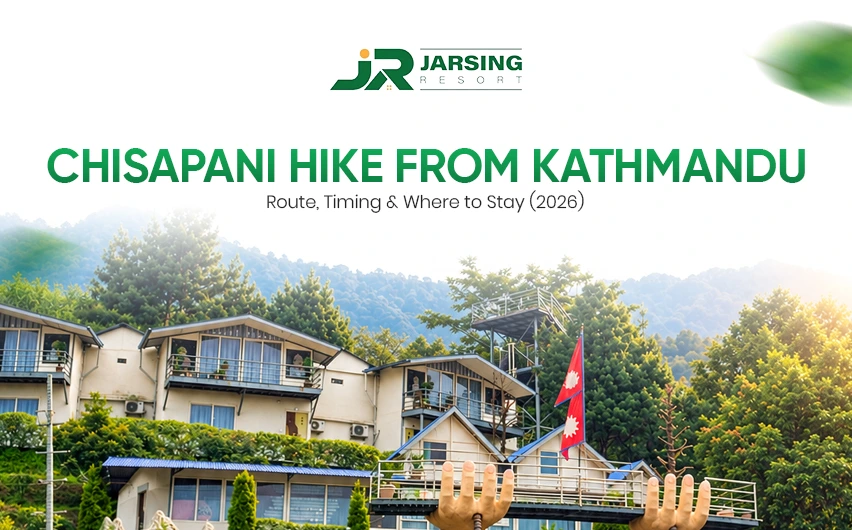
Chisapani Hike from Kathmandu: Route, Timing & Where to Stay (2026)
Planning for a refreshing hike near Kathmandu? The Chisapani hike is one of the popular short hikes that start from the valley. It includes forest trails, traditional villages, quiet areas and mountain views.
The usual Sundarijal to Chisapani path takes about 4 to 7 hours of walking. This time can change based on how you walk, how many breaks you take and which path you choose. It can be done as a long day hike. Staying overnight makes the experience more calm and allows more time to take in the surroundings.
Where is Chisapani and How Far Is It From Kathmandu?
Chisapani is a scenic hill settlement on the northeast side of the Kathmandu Valley near Shivapuri Nagarjun National Park. It is situated around 2,100-2,200 meters (6,900-7,200 ft) above sea level and is famous for its serene atmosphere and views of the Himalayan ranges on a clear day.
The common approach is from Sundarijal, which is accessible by road from Kathmandu. The trek from Sundarijal enters the forest and gradually climbs to Mulkharka and then to Chisapani.
It is important to separate the road distance and hiking distance when people are searching for the Chisapani distance from Kathmandu. Kathmandu to Sundarijal is by road and the main trekking section is from Sundarijal to Chisapani Walking distance is generally estimated at about 11-16 km depending on the exact trail variation.
That means Chisapani is close enough to Kathmandu for a day walk but far enough away to give you a noticeable break from the hustle and bustle of the city.
The Chispani Hike Route: Sundarijal to Chisapani Step by Step
The classic Sundarijal Chisapani hiking route generally follows the trail:
Kathmandu-Sundarijal- Mulkharka-forest/ridge-Chisapani
Each section provides a different experience, from waterfalls and stone steps to forests, villages and open mountain views.
1. Kathmandu to Sundarijal
Leave early from Kathmandu and take a taxi, private vehicle or local transport to Sundarijal. It’s a little less than an hour to an hour and a half ride depending on where you’re coming from and traffic.
The hiking part alone takes several hours and it is recommended to start early. It also provides enough daylight to reach Chisapani at a leisurely pace.
2. Sundarijal to Mulkharka
The trail leads through Sundarijal and then into the forested area. The first of many conspicuous features is a series of stone steps that rise steadily from the Sundarijal area.
You will go around the reservoir and water infrastructure and then continue through the forest. The farther away you are from the road, the quieter the path gets.
Depending on pace and route, it takes about 2-3 hours to reach Mulkharka, a Tamang settlement where hikers can take a break and get simple food and tea.
It is one of the more physically demanding sections, due to the constant uphill climb.
3. Mulkharka to Chisapani
From Mulkharka the trail goes through the forest to the ridge. This section tends to be quieter and is a more natural hiking experience.
The trail goes up to the upper ridge and gradually descends to Chisapani. You can pass through forests, open sections, local settlements or have views over surrounding hills.
It will take about 3-4 hours from Mulkharka to Chisapani, depending on the route and your walking pace.
4. Arriving at Chisapani
After walking for some hours, you arrive at Chisapani. The settlement is a natural stop for hikers on the Chisapani-Nagarkot track.
If the weather is clear you will have mountain views from the ridge, especially at sunrise and sunset. Chisapani is also often an overnight stop before heading on to Nagarkot.
How Long Does The Chisapani Hike Take?
There is not one exact time for hiking because there are different variations of the trail and hikers walk at different speeds. A reasonable time for planning Sundarijal to Chisapani is about 4-6 hours, however some itineraries go for the longer 6-7 hours.
| Section | Distance | Time |
| Kathmandu to Sundarijal | 13-15km by road | 45-75 minute |
| Sundarijal to Mulkharka | 5-6km | 2-3hrs |
| Mulkharka to Chisapani | 5-10km | 3-5hrs |
Times and distances are approximate and will vary according to the exact trail, weather, fitness level and breaks.
Can You Do a Chisapani Hike in One Day?
Yes but it is dependent upon your plan.
If you are taking a day trip to hike from Sundarijal to Chisapani and back along the same trail, be prepared for a long and strenuous day. According to a recent route report, the entire out and back hike, including time at Chisapani, is estimated to take around 7.5 hours.
Most of the hikers prefer to walk one way and stay overnight and return the next day or move toward Nagarkot.
Best Time of the Year For Hike to Chisapani
The most favorable time to go on the Chisapani hike is generally in the clearer and drier seasons, especially spring and autumn.
Spring: March – May
Spring means warmer weather, greener paths. The forest sections can be very attractive, with rhododendrons and other vegetation.
September to November: Autumn
Autumn is one of the best times to go trekking in Nepal. Post monsoon the landscape can be fresh and clearer weather can give you a better visibility of the mountains.
Hiking: October and November are very desirable months for hikers seeking nice walking conditions and views.
Winter: December – February
Trekking to Chisapani is still a nice thing to do on a clear day in winter. But mornings and evenings can be cold, especially around the higher sections and at Chisapani.
Bring warm layers if you plan on staying overnight.
Monsoon: June – August
The hike is doable during the monsoons but wet weather makes the stone steps and forest trails slippery. Rain can also affect visibility and make for a less pleasant overall ride.
If hiking during this period make sure to take waterproof clothing and shoes with a good grip and check local weather conditions before setting off.
What to Carry For the Chisapani Hike?
Chisapani trek does not need technical trekking gears, but it can be very comfortable if you carry the right essentials.
Basic Items:
- Comfortable hiking boots with good grip
- Lightweight pack
- Drinking Water
- Energy bars or treats
- Rain jacket or rain poncho
- Warm layer
- Sunglasses Sunscreen
- Cap or hat
- Basic first aid supplies
- Mobile & Power Bank
- Small cash amount
- Trekking poles (if you want)
If you are staying overnight, bring a change of clothes and any personal items you will need for the nite.
It is also important to leave no trace on the trail. Take your bottles, wrappers and other litter with you until you can find a proper place to dispose of it.
How to Get Back: Chisapani to Nagarkot or Kathmandu
The Chisapani route has an advantage as you have many options after reaching the destination.
Option 1: Back to Sundarijal
The easiest option is to go back the way you came:
Chisapani- Mulkharka-Sundarijal- Katmandu
This is good if you want to keep the trip focused on Chisapani.
However, doing the whole route in both directions on the same day can be tiring. An overnight stay provides more flexibility.
Option 2: Remain in Nagarkot
If you have more time you can continue from Chisapani to Nagarkot.
The Chisapani-Nagarkot route is part of a popular multi day hiking itinerary. It winds through forest, villages, ridge trails and open landscapes before arriving at Nagarkot. The Chisapani to Nagarkot section is about 15 km or more depending on exact route and takes several hours.
This is a good option for hikers wanting to extend a short walk into a longer Kathmandu Valley adventure.
Option 3: Overnight Stay and Return the Following Day
For travelers who don’t want to rush, overnight stops are often the most comfortable option.
Chisapani can be reached in the afternoon, walk around, have dinner, and wake up early for morning views. You can then turn back toward Sundarijal or continue toward Nagarkot.
Where to Stay Near Chisapani?
Where you stay depends on your itinerary. If you want to spend the night right in Chisapani, your best bet is local lodges and guesthouses.
If your trip is extending to Nagarkot you can choose the accommodation around Nagarkot or other nearby hill areas.
You can also combine the walk with a weekend excursion to the Kathmandu Valley and stay at a resort in the surrounding hills.
Stay at Jarsing Resort in Jarsing Pauwa
If you want to turn your Chisapani hike into a longer weekend escape, you can also consider staying at Jarsing Resort in Jarsing Pauwa. It is not located in Chisapani itself, but Jarsing Pauwa is another hill destination around the Kathmandu Valley that can be combined with hiking and sightseeing plans.
Jarsing Resort offers 21 rooms, a restaurant, spa and wellness facilities, a kids play area, picnic facilities, free Wi-Fi and parking. Room options include Deluxe, Deluxe Twin, Deluxe Triple and Standard Quad Rooms. For travelers who prefer a resort style stay rather than a local lodge or guesthouse, it can be an option to consider before or after exploring the surrounding hills.
Looking for a hiking or weekend break near Kathmandu? See Rooms, facilities and accommodation options at Jarsing Resort.
Stay in Chisapani
If you are primarily interested in experiencing Chisapani itself, then the most practical option is to book a stay at a local lodge or guesthouse. This way you can enjoy the village in the evening and start early the next morning.
This is also the easiest option if you are planning to do Nagarkot the next day.
Stay Around Nagarkot
If you are extending your trip beyond Chisapani, Nagarkot is another good option. The area has more choices of hotels and resorts and is famous for sunrise and Himalayan views.
If your itinerary includes the Chisapani-Nagarkot route, then staying in Nagarkot after completing the hike can be a relaxing way to finish the journey.
Chisapani Hike: Day Trip or Overnight?
You can do a Chisapani day trip from Kathmandu, but you will need to start early and be in good shape.
For a more relaxed experience, an overnight plan is usually better. It allows you to:
- Stroll at a leisurely pace
- Take longer breaks
- Enjoy the Mulkharka and forest trail
- Spend more time around Chisapani
- Witness sunrise or sunset
- Don’t rush back to Kathmandu
- Continue toward Nagarkot if you have additional time
If you’re hiking with family or friends and want the trip to feel more like a getaway than a fitness challenge, think about making it an overnight or weekend trip.
Practical Tips Before Starting the Chisapani Hike
A little preparation can go a long way in making the route easier.
Begin early
Starting early gives you plenty of daylight and reduces the chance of having to rush at the end of the trail.
Look at the weather
Weather in the hills and mountains can change quickly. Check the forecast especially during monsoon and winter before you leave.
Bring lots of water
You may find tea shops and settlements along the way but make sure you carry enough water for the main hiking sections.
Wear appropriate footwear
The route is a mix of stone steps, uphill, forest tracks and possibly muddy sections. It’s much better to have shoes that grip well than casual shoes.
Have some cash
Some smaller local shops and tea houses might not always take digital payments, so it’s handy to have some cash on you.
Respect the trail.
Don’t leave behind plastic bottles or food wrappings. “Leave no trace” on the trail and respect the local community and natural areas.
FAQ Section
1. What are the facilities offered by Jarsing Resort?
Guests have access to amenities including Wi-Fi, parking, spa and wellness services, a kids play area, picnic facilities, restaurant services and event spaces during their stay.
2. Can I view mountains from Chisapani?
Yes. From Chisapani one can see several Himalayan ranges on clear days. At sunrise and sunset the ridge is especially beautiful, but visibility is very dependent on the weather and season.
3.Is Chisapani appropriate for first time hikers?
Yes. You don’t need previous high altitude trekking experience for the Sundarijal–Chisapani route. However, it is still a several hour walk uphill so beginners should take it at a comfortable pace, take breaks and bring appropriate shoes and water.
4. What if it rains on the walk?
If rain is in the forecast, bring a waterproof jacket or poncho and wear shoes with good grip. Wet weather can make trails slippery. Take it easy on stone steps and muddy patches. If conditions are unsafe, it is better to defer or shorten the walk.
5. Can I stay at Jarsing Resort after a hiking trip?
Yes. The resort offers comfortable accommodation, dining facilities and wellness services, making it a perfect place to relax after a day of exploring nearby hills and trails.
6. How Can I Contact Jarsing Resort?
For room bookings, reservations, and accommodation inquiries, contact Jarsing Resort through its official website for the latest contact and booking information.

All Categories
Recent Posts

Best Resorts Near Kathmandu for a Weekend (2026 Guide with Real Prices)

Chisapani Hike from Kathmandu: Route, Timing & Where to Stay (2026)